

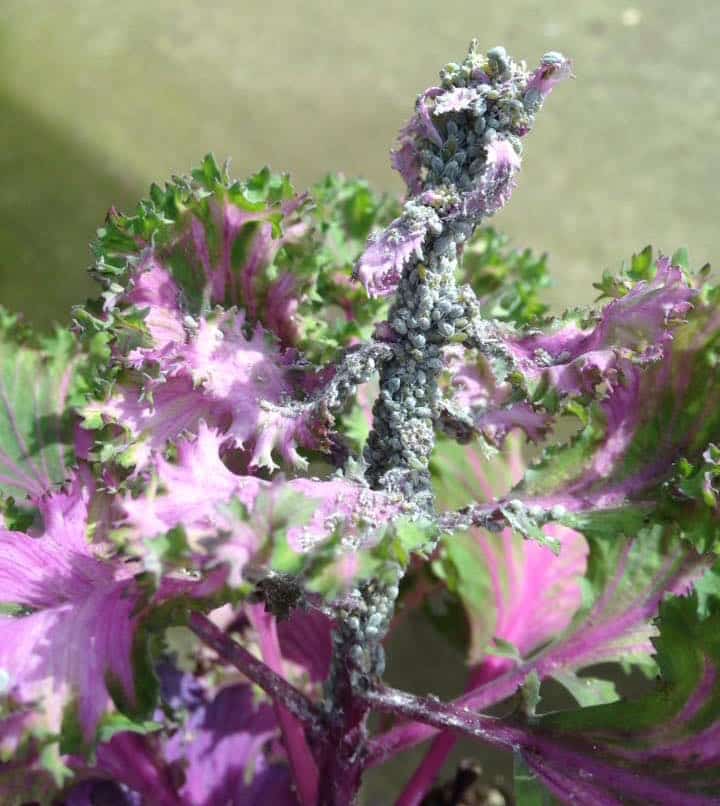
Aphids on flowering kale
Aphids are destructive — these small, soft-bodied insects suck a plant’s juices. The whitish cast skins can be mistaken for whiteflies (which is an entirely different problem). We recommend bringing a plant sample to one of our stores in a small plastic bag for diagnosis.
About Aphids
Adult aphids are usually 1/8 inch, pear-shaped, with long legs and antennae, and vary from green, yellow, brown or red to black. Woolly aphids are covered with a waxy, whitish to gray coating (and may be mistaken for mealybugs). Woolly apple aphids can be found on apple trees, cotoneaster, hawthorn, pyracantha, elm, ash, and some conifers.
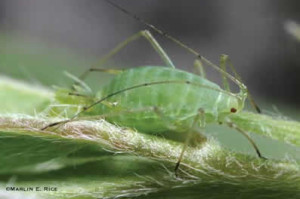 Aphids also have a pair of tube-like projections (cornicles) near the hind end of the body.
Symptoms
Feeding by high populations can slow plant growth or cause leaves to yellow, curl, or drop early. Some species distort stems or fruit or cause galls birth to on roots, leaves, or stems. They can also transmit viruses, not usually a problem in landscape trees and shrubs.
During warm weather, these pests may go through a complete generation in less than 2 weeks. There are many generations per year, populations can increase rapidly in moderate temperatures. Throughout most of the year, adult aphids will give live young without mating! (They can also produce over wintering eggs, that’s why we suggest using dormant sprays starting in the fall.)
The honeydew (sticky sugary sap) excreted by aphids provides an excellent medium for black sooty mold. Many gardeners mistake the sooty mold as the problem, but it’s actually a symptom of aphid infestation. Copious honeydew and sooty mold can create a sticky, unsightly mess on trees, sidewalks, cars, and other surfaces beneath the plant.
Management
Sprays – Predators and parasites may not always appear in sufficient numbers until after aphids become abundant. To preserve beneficials, use earth-friendly products like Bonide Insecticidal Soap or Rose Rx. Use baits (Monterey, Amdro, Terro) or sticky barriers (Tanglefoot/collars) to control honeydew-seeking ants, since they protect aphids from their natural enemies.
Mechanical Controls – Aphids can be hosed off with a strong stream of water or pinched by hand.
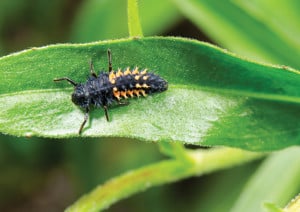
Ladybug larvae
Biological Controls – Ladybugs (Hippodamia convergens) and their larvae, which resemble small black and orange crocodiles, the larvae of lacewings, are common predators, as well as many small wasps. The wasps lay their eggs inside the aphids, leaving “mummies” that are round and tan, with a small hole where the adult has chewed its way out.
Many aphid predators are attracted by the presence of honeydew, as well as nectar-producing plants.

Ladybugs on the aphid hunt!
"*" indicates required fields
Enter your zip code or use your current location.

