
“Any plant, usually from an arid climate, that has fleshy leaves and stems to store water is considered a succulent”
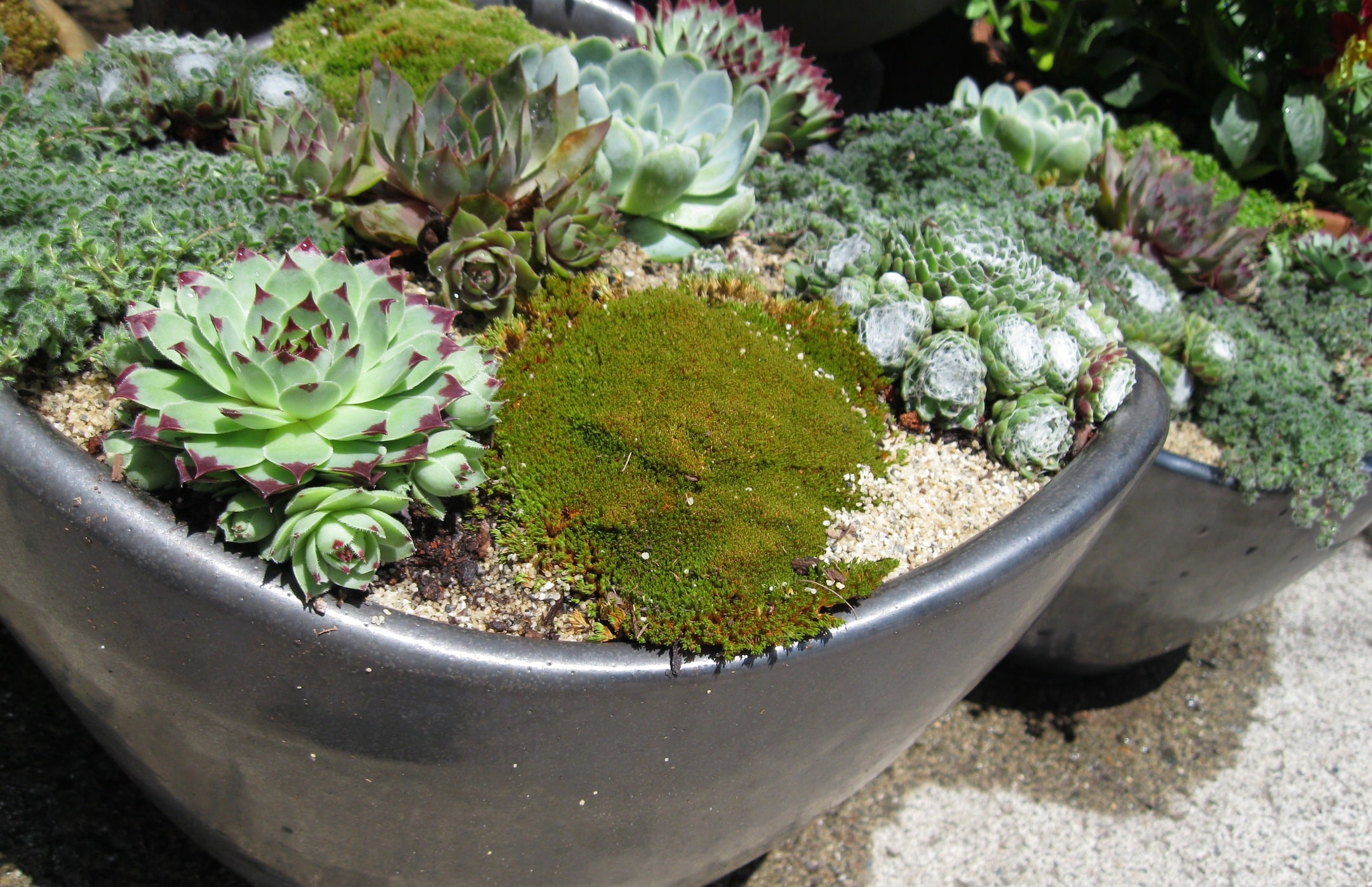
Varieties include: cacti, sedum, aloe, agave, echeveria, sempervivum, crassula, kalanchoe, and hundreds of other species
In general, the term “succulent” only include species with fleshy leaves, and any plant with spines is called a “cactus” (even though all of these plants fall under the succulent umbrella)
Go for the Gusto!
Don’t be afraid to use succulents in your outdoor landscaping
A little research goes a looooong way!
choosing the best variety for your yard
Companion planting
Container planting
“Succulents Don’t Need Water, Right?”
Wrong .. Everything needs water!
In that case, when and how?
It’s a Dirty Job, but Somebody’s Gotta Do It!
It IS possible to turn clay soil into desert soil ..
“Necessary and/or Helpful” amendments:
Rule of thumb: equal parts sand, perlite, and potting soil to provide the drainage these plants need.
Yes, yes, yes, you can use pumice 🙂
I’m Hungry, Are You Hungry?
Even succulents need to be fertilized
Fertilize your succulents in spring
Use a balanced fertilizer with equal proportions of nitrogen, phosphorous, and potassium
To Sun, or Not to Sun – THAT is the Question
Succulents require at least 6–8 hours of full sun a day
A quick climate lesson: Bay Area heat and Desert heat are not the same thing
Over-Wintering Your Succulents
Frost cloth is your friend
"*" indicates required fields
Enter your zip code or use your current location.