

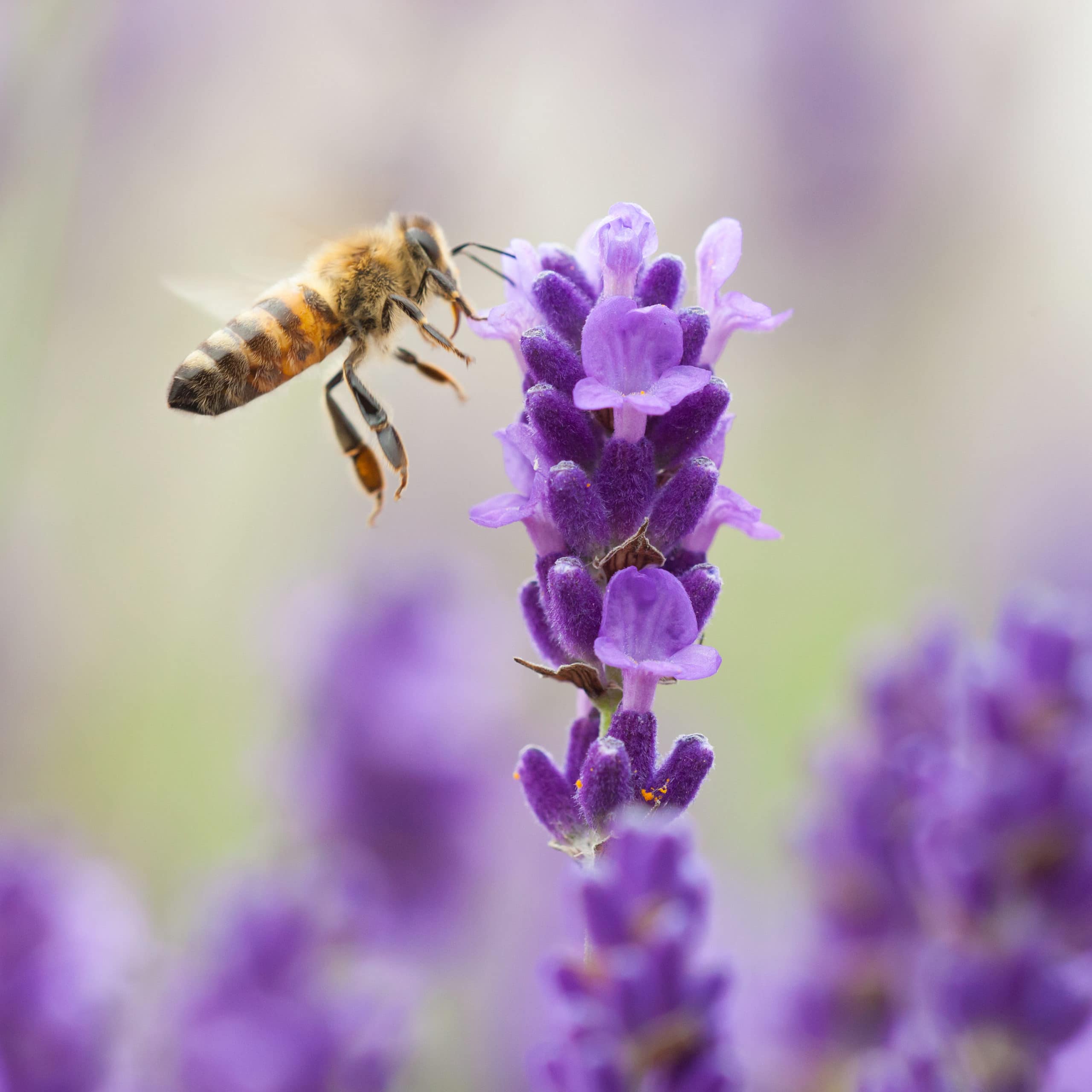
 Native to the Mediterranean and a member of the mint family, Lavender is a favorite in landscapes worldwide for its beautiful and fragrant flowers.
With blossoms in shades of white, pink, violet-blue, and purple, Lavender can be a versatile addition to any garden. Whether they are small at 1½ feet tall and wide or larger at 3-4 feet tall and wide, Lavenders can be used as informal hedges, edging, or as background plants in borders.
Mixing Lavender with other plants like Purple Fountain Grass, Loropetalum, Euphorbias, or bronze Phormiums can create a stunning visual effect. Lavender pairs well with Culinary Sage and Erigeron, or can be combined with the clean lines of succulents for a modern look. We know of a small meadow of English Lavender edged with Festuca glauca in a backyard in the outer Richmond in SF.
Planting Lavender near fruit trees and vegetable beds can help attract pollinators like butterflies, bees, and hummingbirds, providing a soothing experience of watching these creatures in action. Leaving some old blooms can even attract dark-eyed juncos in the fall.
Lavenders thrive in full sun, moderate water, good drainage, and little to no fertilizer, with a preferred soil pH of 6.5 to 7.5. They can handle a range of conditions, from cool coastal climates to hot inland areas, and are especially suited to sandy soil. While drought-resistant once established, regular watering can help them produce more blooms and grow larger.
Deadheading old blossoms will encourage the plant to keep blooming all summer into the fall. This is different than pruning. The correct annual pruning is necessary to prolong the life of the plant, some can live as long as ten years. Lavender can be sheared lightly after blooming has finished in the fall, taking off the stem about an inch into the leafy part of the branch. This keeps the plant in a tidy dome shape. If Lavender is not sheared it will get leggy and ragged looking and even sprawl apart. Never cut back to bare wood, especially late in the year. If, in the spring you see new growth breaking at the base of the plant, then you can prune down to it to encourage replacement growth.
Harvesting Lavender
"*" indicates required fields
Enter your zip code or use your current location.

