
Sloat Garden Centers logo

An Interview with Master Pruner Elizabeth Ruiz

Home | Gardening | An Interview with Master Pruner Elizabeth Ruiz

Gardeners have flocked to Elizabeth Ruiz’s pruning webinars and workshops for more than a decade. We wanted to learn more about Elizabeth and her favorite trees to prune. Read our interview with this delightful pruning professional.


“As an aesthetic pruner I look for the trees’ essence and beauty, helping them to reveal themselves without compromising their health; finding the thin line between control and nature makes the garden show itself as a unity.”  – Elizabeth Ruiz


How did you begin working with plants and learn about aesthetic pruning?

I love being in nature – it invigorates me and reminds me every day how smart and powerful Mother Nature is in every element of herself.  With that love for nature, I decided to work with design and blend it with my love of being outside. So I studied Horticulture at my beloved Merritt college.

After a hiking trip to Yosemite during my 3rd semester, I decided I was going to be a nature warrior to care for nature and learn to live with it in harmonious ways. Nature has told me to look at the good and to find that thin line between compromising and standing up for what I believe.

What are your favorite trees to prune?

That is so difficult. I love to work with so many of them. Some of my favorites are:

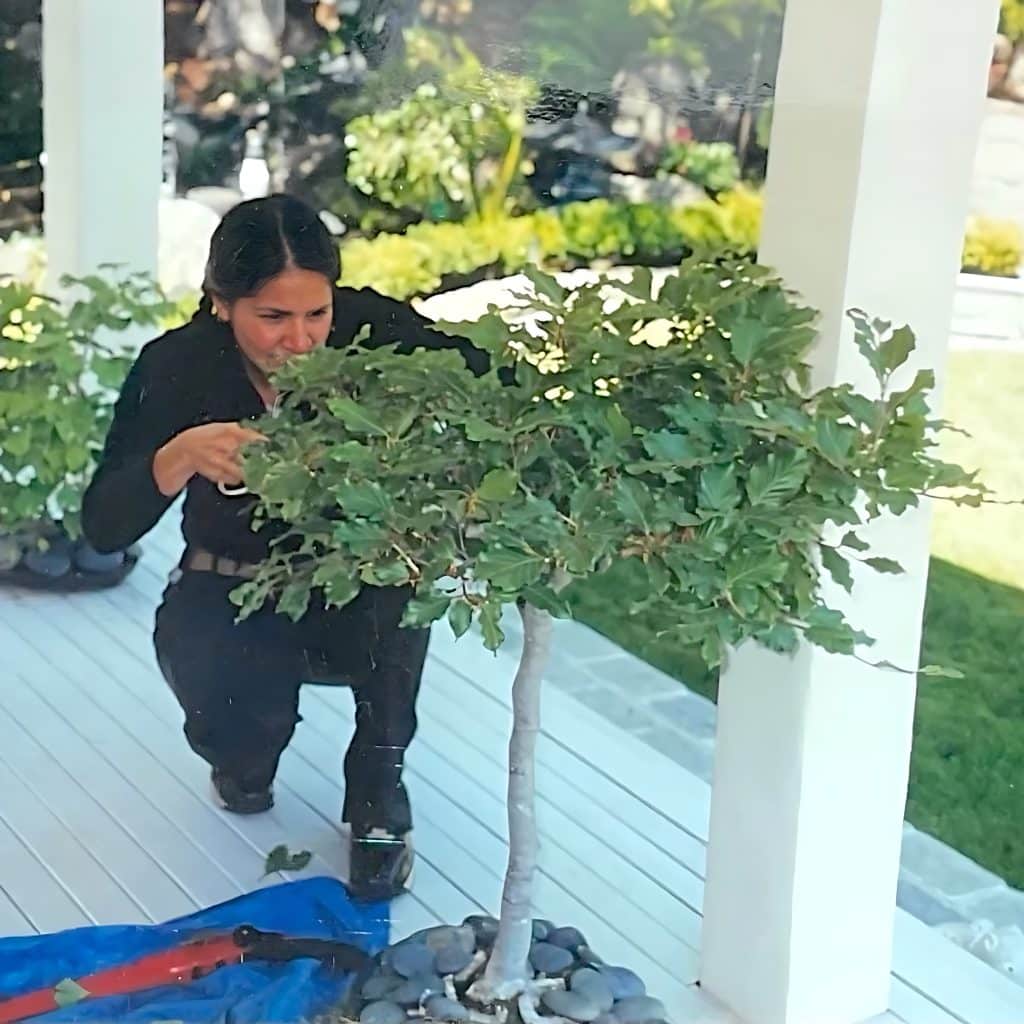
  • Maples for their beauty. They make me look like an artist. I know it’s them…not me.
  • Figs, because they smell sweet all throughout the pruning process. That smell makes my day loving, happy, and sweet.
  • Citrus, because it takes me back to my favorite memories when we would visit my favorite uncle and his farms. He had the most amazing orange trees.
  • Fruit trees. I love that I can take a break from pruning and eat an apple, pear, persimmon… right in the tree. Makes me feel at one with nature.
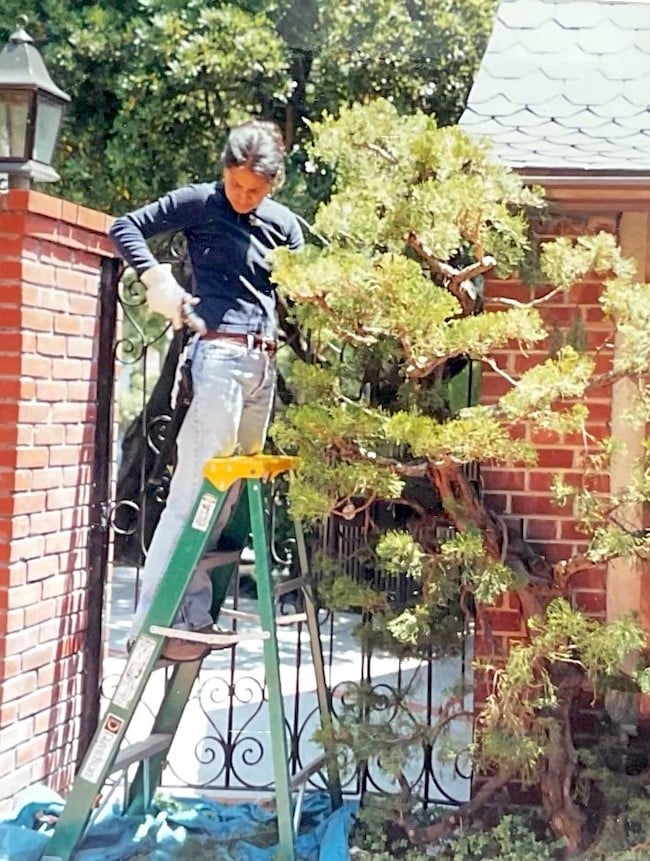
  • Japanese style black pines as they remind me of that thin line between control and nature and the respect to nature.
  • Leptospermums, the movement, how they rise and twist and turn and back.
  • Junipers and Camellias, for their forgiveness. It is the best tree to teach and to learn.


What advice can you offer gardeners who want to try to prune their own plants?

Make good cuts. I know it sounds simple, but a good cut will expand the life of your plant and even if you don’t know what you are doing, your plant will keep its health.

About a good cut:
  • No ripping, no tearing of bark.
  • Does not leave stubs. Stubs are open wounds where pests and diseases will enter.  Also, open wounds will deteriorate the hard wood (inside wood) making the tree weaker and cause it to break
  • Angle the cut, so the plant can wall-off the open wound faster.  The angle is according to the branch you are cutting to.
  • Is right above the collar, leaving the collar,  so the plant can protect itself and heal faster.
  • Transition. this means that the branch you are cutting and the branch you are cutting to are close in size. This will help the tree not to react in a stressful way and heal faster
  • Cut to something. When you are reducing a branch, cut to a secondary branch. This helps the plant to direct the energy of the removed part and in that it has better growth and healing.

Share this post

Related Posts

Newsletter Sign Up

"*" indicates required fields

This field is for validation purposes and should be left unchanged.
Copyright ©2026 Sloat Garden Center