
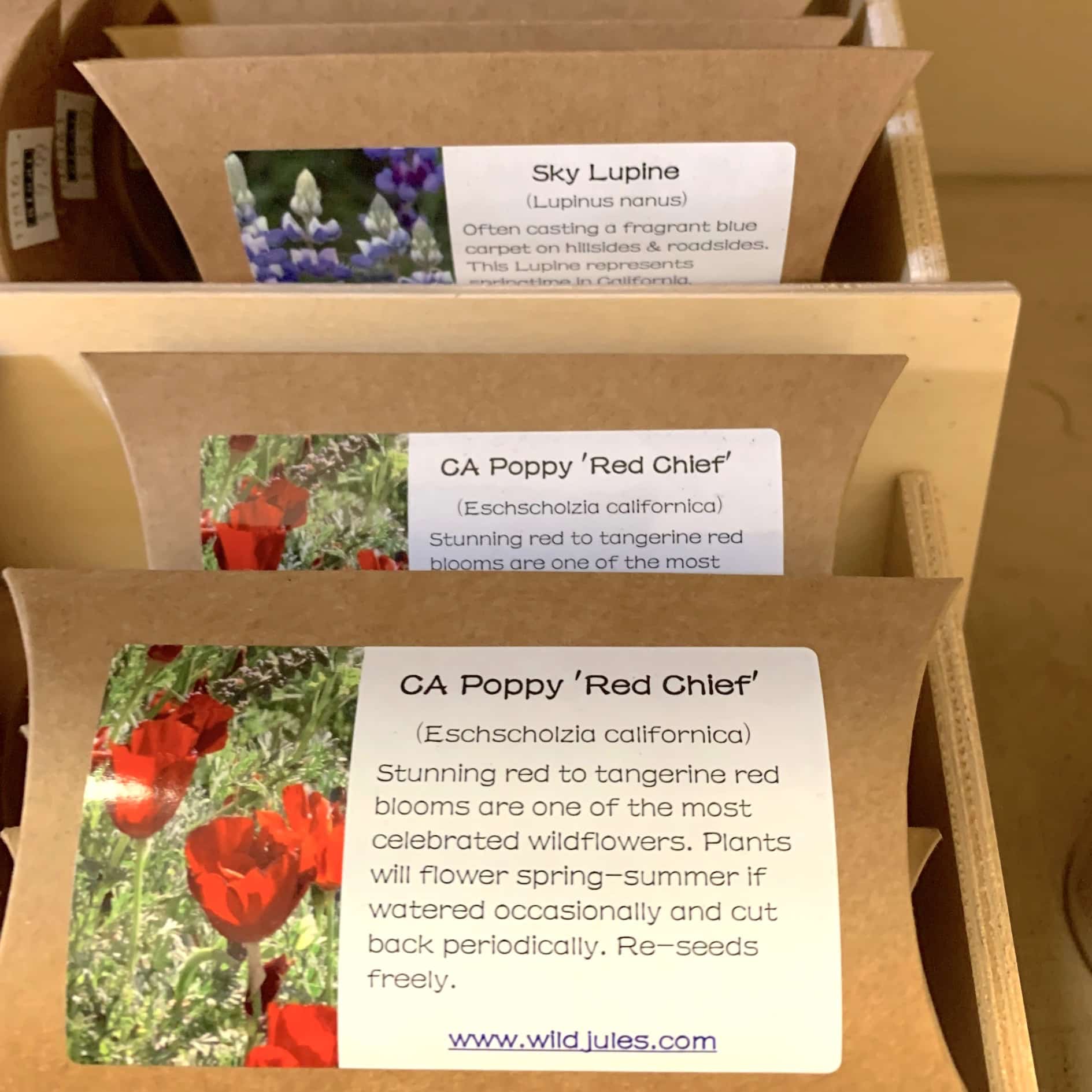
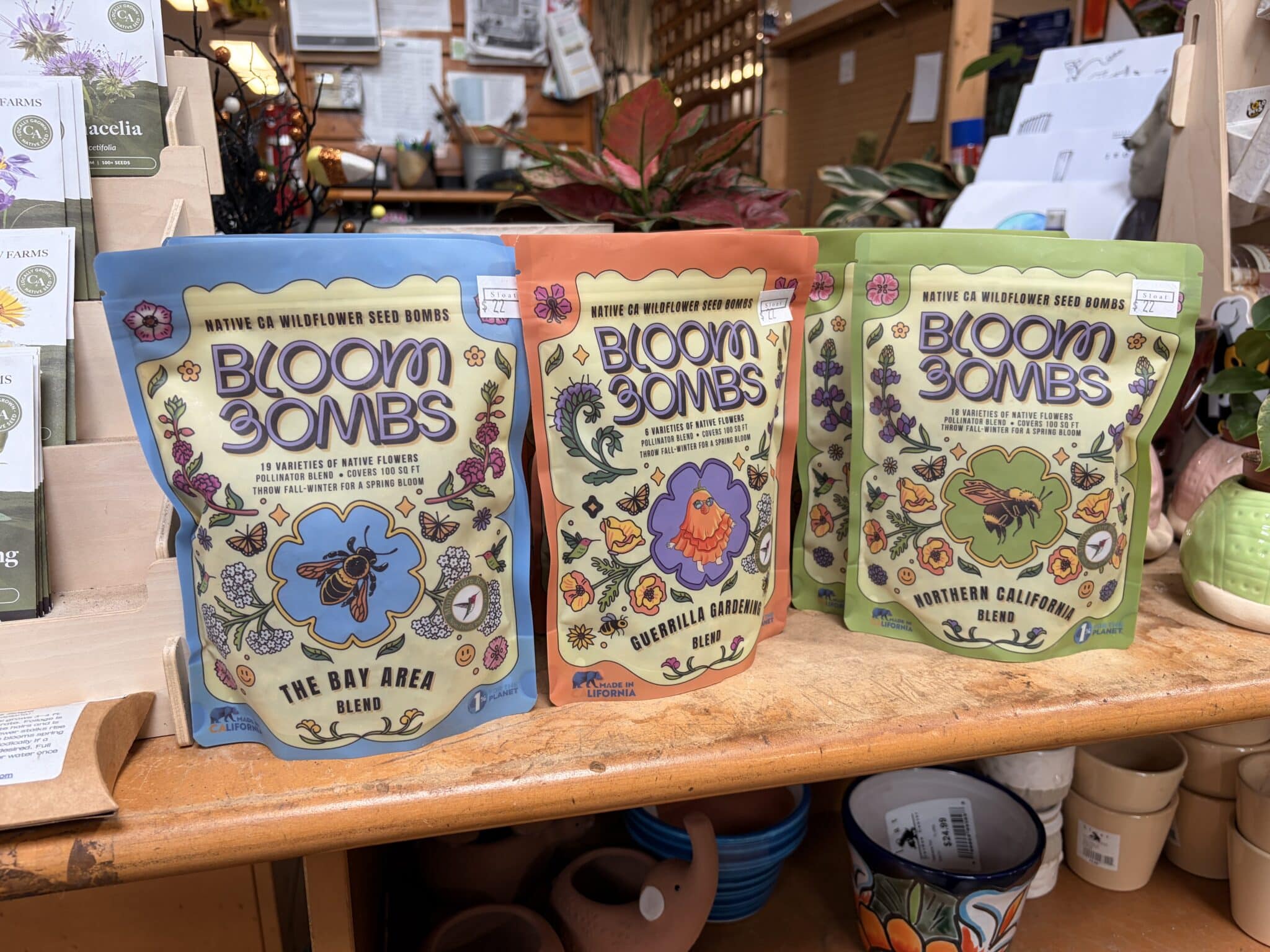
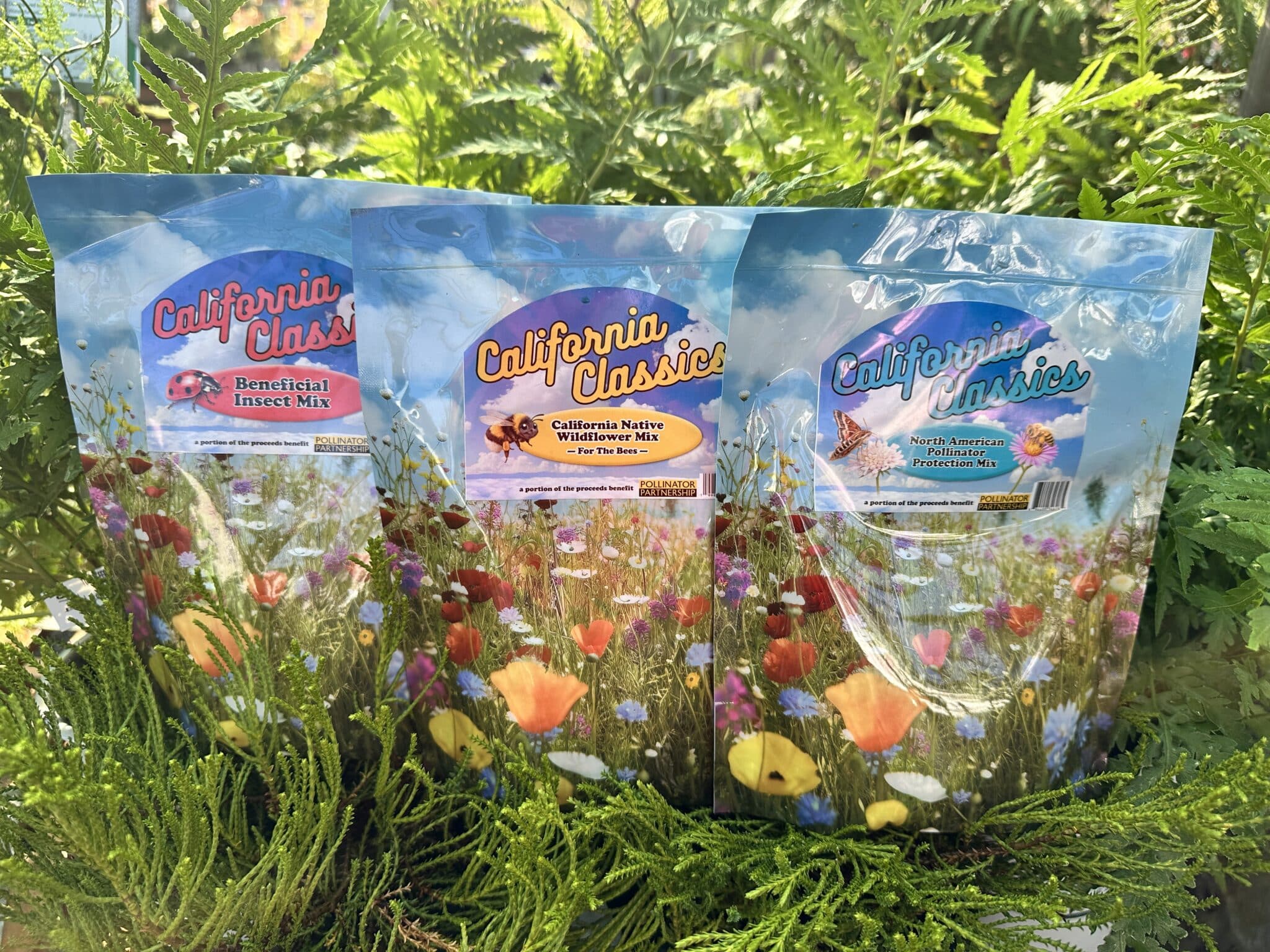

Late Fall is the time to sow a spring meadow. Toss a handful of seeds across bare soil, let the fall and winter rains settle them in, and forget about it until spring surprises you with color!
That’s the beauty of planting wildflowers now. California wildflowers are adapted to our natural weather patterns, so fall rain and cool temperatures are exactly what they’re waiting for. Here’s how to set up a spring meadow, step by step.
Pick your spot
Most wildflowers want plenty of sun, so look for a spot that gets at least six hours of light a day. Think about your own microclimate, too. A foggy yard near the coast, a sheltered corner in the city, and a warm hillside inland will all bloom on slightly different schedules. Don’t worry if yours runs a little early or late.
No in-ground space? Wildflowers can do well in containers. Choose a wide, shallow pot with good drainage, fill it with fresh potting mix, and follow the same steps below.
Choose your seeds
Wildflower seeds come in all kinds of mixes, from blends that draw in bees and butterflies to ones that invite helpful garden insects. We carry several options, so stop into your neighborhood Sloat Garden Center and ask (selection varies by store). Look for a mix suited to California, and check the packet for sun and spacing needs.
Step 1: Prepare the area
Pull out existing weeds and rake the soil to loosen the top layer. Wildflowers don’t need rich soil, so there’s no need to amend heavily. They just need seeds to make good contact with bare ground. For containers, fill with fresh mix and smooth the surface.
Step 2: Scatter the seeds
Sow about 20 seeds per square foot. The ideal amount can vary by mix, so check your seed packet. A good trick is to mix the seeds with a bit of sand in a bucket. It helps you spread them evenly and shows you where you’ve already been.
Step 3: Cover lightly
Most wildflower seeds only need to be planted ⅛ to ¼ inch deep. Rake them in gently. Small seeds do best when left near the surface, so resist the urge to bury them.
Step 4: Water, or let the rain do it
In most years, fall and winter rain will handle the watering for you. If it’s a dry stretch, or you’re growing in containers, give the seeds an initial sprinkle so they settle in and don’t wash away.
Step 5: Protect from hungry birds
This step isn’t absolutely necessary. Birds will happily snack on freshly sown seeds. Short stakes tied with ribbons of scare tape, also called flash tape or holographic tape, can help. The shimmer and movement keep birds wary until the seeds germinate.
Step 6: Wait and enjoy
By spring, you’ll have a colorful meadow buzzing with bees and butterflies.
Ready to get started? Stop into your neighborhood Sloat Garden Center, ask about our wildflower seed options, and let the rain do the rest.

