
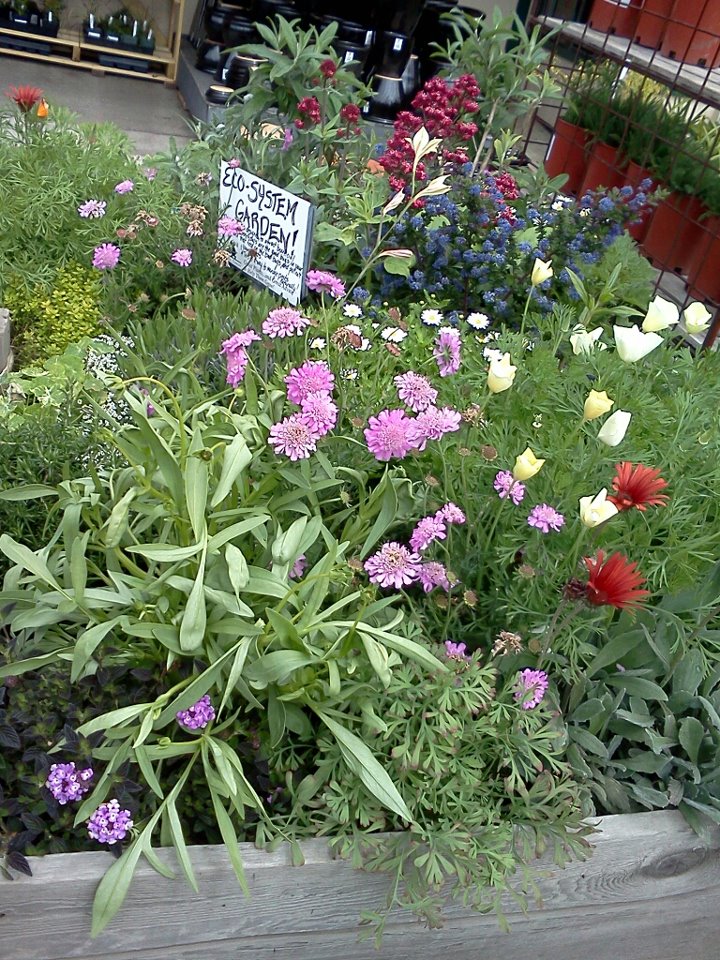
 One way to encourage visiting beneficials to be permanent pest patrollers is to grow flowers that are good producers of nectar and pollen; with your help they’ll have food when pest populations decline. Even if your garden is as small as a few pots on a patio, a container of these insectary plants can help keep the good bugs around. In a larger garden, insectary plants can be planted among other plants.
What kind of pot should I use? Ideally, you will want to have enough different plants for blooms throughout the year, but that could mean a big tub. Container size can also depend on weight limits on a balcony garden, the number and mature size of the plants you choose, and how often you want to water it. Perennials and shrubby plants need extra space. For shade-loving plants, a porous pot avoids moldy soil. Don’t forget drainage holes. To keep the pot out of water, set it on pebbles or other supports.
What kind of soil is best? A light, fast-draining soil is best for pots. Supplement commercial potting soil with compost and a bit of slow-release fertilizer (organic or pelleted). Fertilizer enhances plant strength and size, but too much fertilizer—especially for native plants—will favor leaves at the expense of flowers.
 What’s special about container care? Group plants with like needs. Water pots more often and set them in slightly shadier spots than similar in-ground plantings. Mulch on top (leaves or compost) can keep pots from drying out too fast and provide shelter for insects. For early bloom, plant the pot with wildflower seeds in fall.
What beneficial insects can I attract? Ladybugs, properly “ladybird beetles,” are the best-known beneficials, but most people don’t recognize their alligator-shaped larvae—even better predators than the adults—or their orange eggs on the bottom of leaves. Likewise, lacewing and hover fly larvae are the predaceous stage. And there are many more beneficials, including parasitic wasps—happily, much too small to sting—and soldier bugs, armored like six-legged tanks. Guides such as “Mac’s Field Guide: Good [and Bad] Garden Bugs of California” (a laminated sheet) and Starcher’s charming Good Bugs for Your Garden can introduce these tiny neighbors.
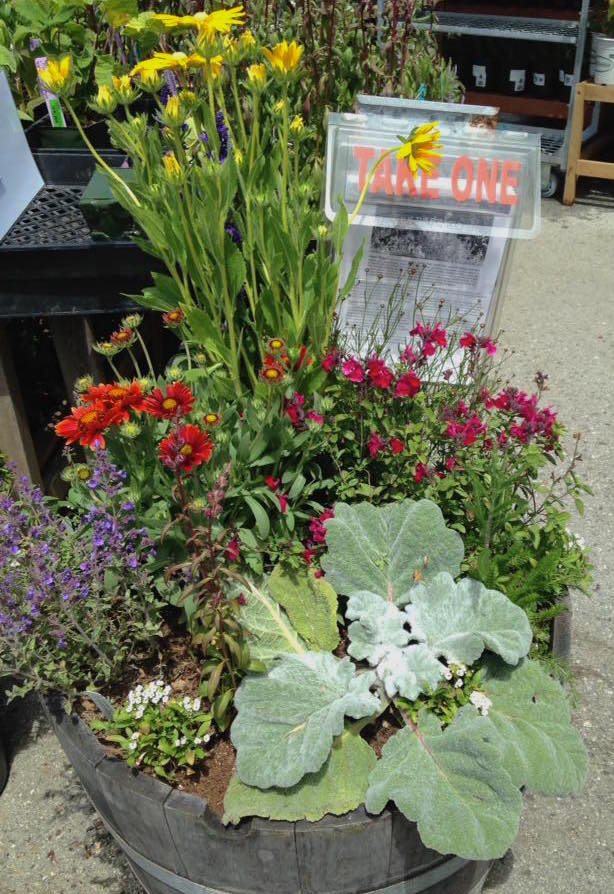
Joan Marlowe of the California Native Plant Society, Santa Clara Valley Chapter, designed the Good Bug Tub pictured using California native plants. Natives need little water and little or no fertilizer. She used a 20” plastic pot mounted on rollers and plans to add Sulphur buckwheat (Erigonum umbellatum var. polyanthum) when available.
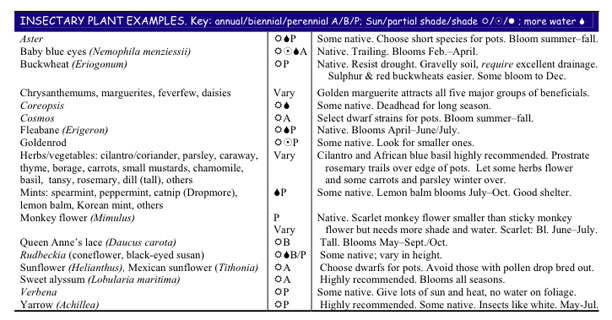
Plan for diversity. One of every five flowering plant species is attractive to beneficials. Look for flat or shallow- throated flowers sized to the tiny mouthparts of beneficials and rich with nectar and pollen. Carrot relatives (many herbs) are top nectar producers; note they must flower to be insect food. Sunflower relatives (think daisy form) bloom longer. The small flowers at the center are surrounded by ray flowers with their petal landing pads. For early bloom, many species can be seeded in fall.
Bauer, N. The Habitat Garden Book: Wildlife Landscaping for the San Francisco Bay Region, 2001. Flora for Fauna: Habitat Plants for Birds, Butterflies, and Beneficial Insects. Booklet from Wayward Gardens ($5), (707) 829-2885. “Gardening for Wildlife with Native Plants,” Bay Nature Supplement, Jan.-Mar. 2003; and www.baynature.com (extensive articles and links) www.ipm.ucdavis.edu. (University of California Integrated Pest Management site: pest identification, IPM approach) www.cnps-scv.org (a local California Native Plant Society chapter site; see “Gardening with Native Plants”) www.laspilitas.com/ (database of California native plants with photos, range, cultural information; more)
Marin County Stormwater Pollution Prevention Program www.mcstoppp.org P.O. Box 4186 San Rafael, CA 94913-4186 415-473-6528 or email: mcstoppp@marincounty.org
"*" indicates required fields
Enter your zip code or use your current location.

